Colorado’s most iconic backpacking loop, done counter-clockwise, mid-September, 2.5 days. Here’s the honest version.
If you’ve been dreaming about the Four Pass Loop in the Maroon Bells-Snowmass Wilderness, you’ve probably already seen the photos. The ones with the jagged peaks reflected in still alpine lakes. The ones that make it look almost too perfect to be real.
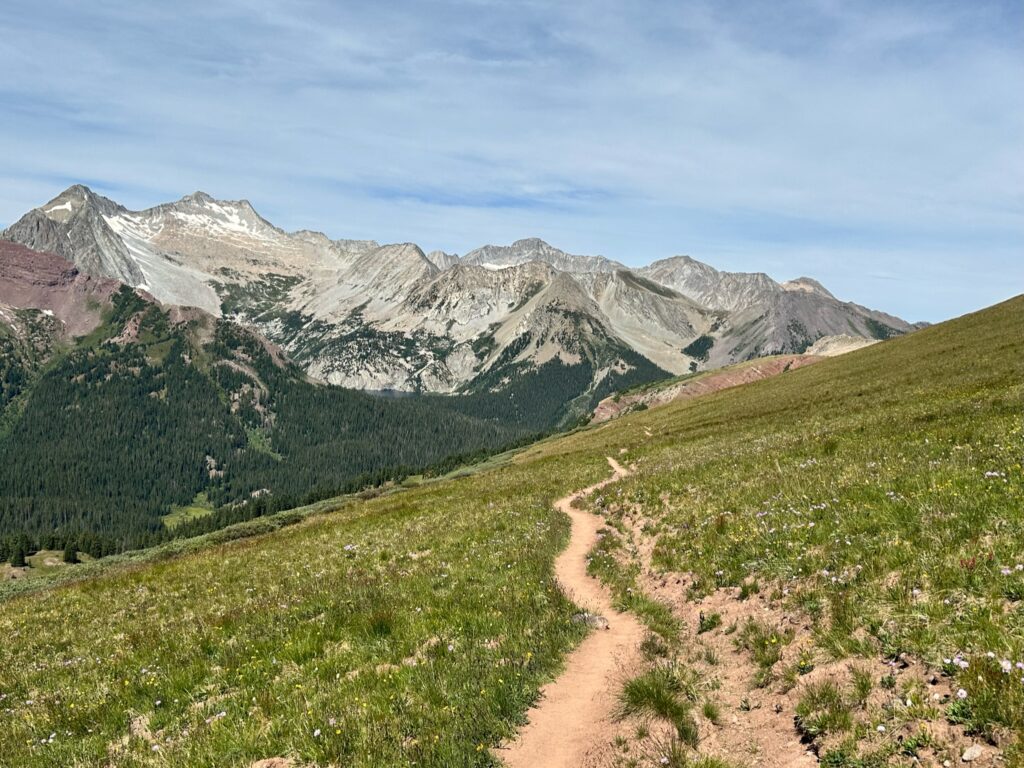
Here’s the thing: it actually looks like that. But there’s a lot the photos don’t tell you — the logistics, the permit stress, the day that almost broke me, and what it’s actually like doing it solo with your dog as your only company.
I did this loop over 2 nights and 2.5 days, counter-clockwise starting from the Maroon Lake trailhead. Mid-September, mid-week. Just me and my dog. This is the post I wish I’d found before I went.
The Permit Situation (And the Parking Hack Nobody Talks About)
Let’s get this out of the way first because it stressed me out more than any of the passes.
The Maroon Bells area requires a timed entry reservation during peak season, and getting a permit mid-week is significantly easier than weekends — that’s not an accident, that’s part of the strategy. If you have any flexibility in your schedule, go Tuesday through Thursday. The difference in permit availability is real.
Here’s the thing I didn’t fully think through: my parking pass technically didn’t start until my second day. I’d already driven to Snowmass the night before to stage close. I actually went to the ranger station the evening before to ask about it, which I’d recommend doing if you have any logistical uncertainty. The ranger’s suggestion was simple: show up very early the next morning and park in the lower lot. At that hour, it wasn’t an issue.
So if you’re in a similar situation — show up early, park in the lower lot, and talk to a ranger the night before if you have questions. They’re genuinely helpful and it takes 10 minutes of anxiety off your plate.
Why I Went Counter-Clockwise
There’s debate online about which direction to run this loop. I went counter-clockwise and I’d do it the same way again.
Starting counter-clockwise from Maroon Lake means you hit Buckskin Pass first, which eases you into the elevation gain on day one before the bigger demands of day two. It also means you’re crossing the more exposed passes with fresher legs across the trip overall.
That said — day two going counter-clockwise is no joke. More on that below.
Day by Day Breakdown
Day 1 — Maroon Lake to Snowmass Lake
You start with Buckskin Pass — the highest point on the loop — which sets the tone immediately. Tackling it first when your legs are fresh is one of the main arguments for going counter-clockwise, and it’s a good one. The climb is sustained but the views open up early and stay with you. Once you’re over the pass and down into the basin, you make your way toward Snowmass Lake via Trail Rider Pass on day two.
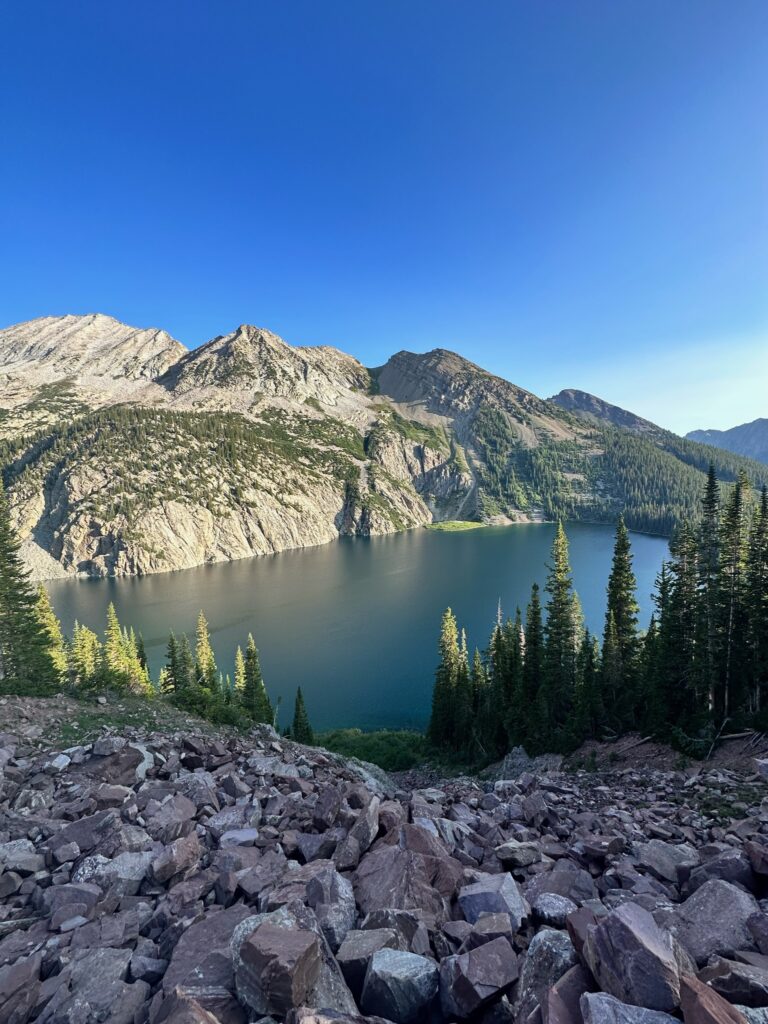
Snowmass Lake was one of the most beautiful campsites I’ve ever had. The lake sits in a wide open basin with peaks on three sides. Setting up camp there solo as the light changed was the kind of moment that makes you remember why you do this.
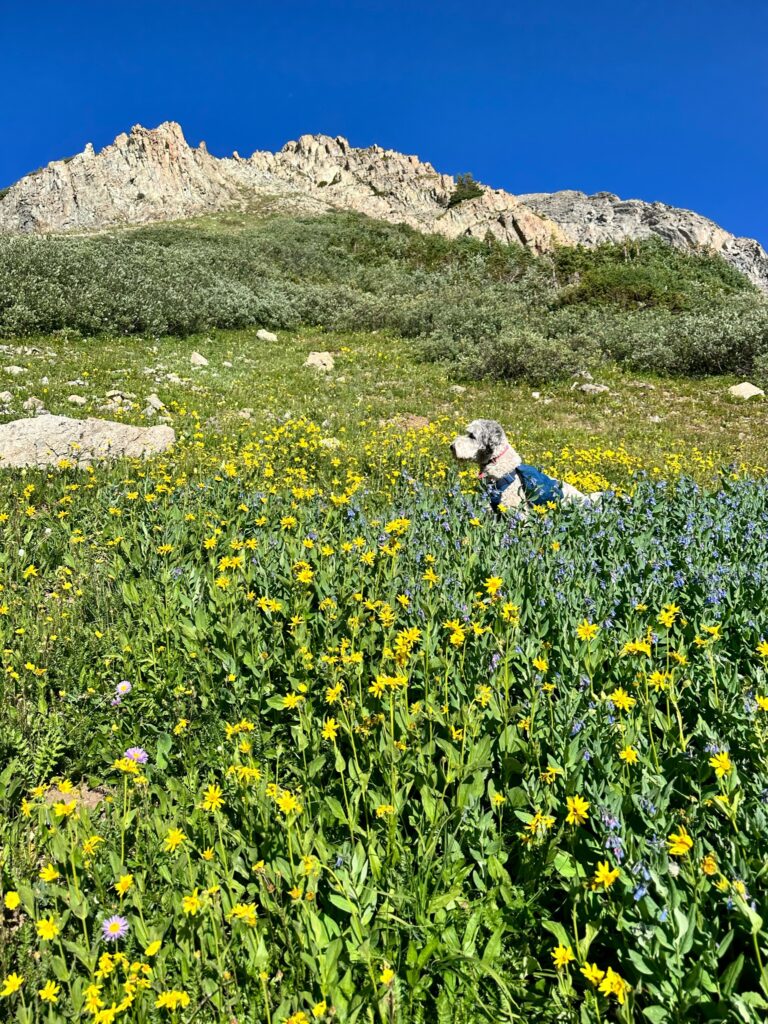
Dog note: The trail is well-maintained and my dog had no issues on day one. Leash rules are enforced — dogs must be on leash throughout the wilderness area — but if your dog is a capable trail hiker, the terrain itself won’t be the limiting factor. Don’t forget a bowl!
Day 2 — The Day That Tests You
This was the hardest day, and I want to be honest about it so you go in prepared rather than blindsided.
Going counter-clockwise on day two, you’re doing three passes: Trail Rider Pass, Frigid Air Pass, and then West Maroon Pass. By the third pass of the day, with fully loaded pack and trail miles already in your legs, it’s a grind. Yeah, time to buy those poles.
It wasn’t dangerous. The weather was perfect — and in mid-September in Colorado, that’s partly luck, partly timing. Afternoon thunderstorms are the real hazard on exposed ridgelines here. Start your passes early, be over them by noon if at all possible.
The hardest part mentally? Doing it solo. There’s nobody to commiserate with, nobody to say “yeah this is hard” at mile 18. My dog was everything on this day. Having a living creature that needs you is genuinely motivating when you’re digging deep.
Fravert Basin bug situation: If you camp in or pass through Fravert Basin, bring bug protection. It can get aggressive. I wish I’d had a head net. This is not optional in late summer / early fall.
Day 2.5 — The Final Push Home
The last half day back to Maroon Lake felt earned in the best possible way. The loop closes and suddenly you’re walking back through familiar terrain with all four passes behind you.
Water on the Trail
There is water available throughout the route — streams, lakes, and snowmelt depending on season. That said, Colorado snowpack varies significantly year to year, and conditions I experienced may not match what you find. Always filter everything, always check current conditions with the Forest Service before you go, and carry more capacity than you think you need between sources.
A good filter like the Sawyer Squeeze weighs almost nothing and is non-negotiable in the backcountry. I also love this Hydrapak and Hydrapak Filtration Cap It’s in my hiking favorites on Amazon along with everything else I actually use on trail.
Gear I Was Glad I Had
I’m not going to list every item in my pack. Here’s what actually mattered:
The things that earned their weight:
- Trail running shoes / approach shoes — I wore my Brooks Cascadia 19s. For a loop like this I actually prefer a trail runner to a traditional hiking boot. More ground feel, lighter on long descents.
- Hydration vest — I used my Salomon Active Skin 8 even for the backpacking sections. It keeps weight centered and accessible.
- Bug head net — didn’t have one, needed one. Don’t repeat my mistake.
- Trekking poles — on the third pass of day two, these were the difference between suffering and managing.
- Dog bowl + extra water capacity for your dog — your dog can’t filter their own water. Plan accordingly.
All of the above (and more of what I actually use) is linked in my hiking favorites on Amazon. If you’re coming at this as a trail runner doing your first backpacking trip, I also have a separate list of my trail running essentials — shoes, pack, poles — that crossover heavily for a trip like this.
What I’d reconsider: Honestly my pack weight. Going solo means you carry everything with no shared gear to split. I’d go lighter on the shelter next time — a lighter bivy or tarp setup would have saved meaningful weight on those climbs.
The Honest Solo Assessment
People ask if the Four Pass Loop is safe to do solo. My answer: yes, with caveats.
You need to be honest with yourself about your fitness and experience level. The elevation (you’re spending most of the trip above 10,000 feet, with passes over 12,000) hits people differently. If you’re not acclimatized or haven’t spent time at altitude recently, give yourself an extra day and go slower than you think you need to.
The solo mental game is real. I’m an ultra runner — I’m used to spending a lot of time alone with my thoughts on the trail — and it still had its hard moments. The dog helped more than I can quantify. If you’re not accustomed to solitude on multi-day trips, go with someone your first time.
That said? The solitude was also part of what made it. Some of the views I had to myself at 6am on day two are mine in a way they wouldn’t have been in a group.
Quick Reference
| Logistic | Notes |
|---|---|
| Distance | ~26 miles |
| Elevation gain | ~8,000 ft |
| Time | 2 nights / 2.5 days (doable in 3 nights for a more relaxed pace) |
| Direction | Counter-clockwise recommended |
| Start/End | Maroon Lake Trailhead |
| Best season | Mid-July through late September |
| Permits | Required — book mid-week for better availability |
| Dogs | Allowed on leash |
| Water | Available throughout — always filter, check conditions |
Before You Go
- Book permits as early as possible. Mid-week gives you a real advantage.
- Stay nearby the night before (Aspen or Snowmass) if you can. Early morning arrival matters.
- Check current trail and snowpack conditions with the White River National Forest.
- Tell someone your itinerary and expected return time. This is non-negotiable when going solo.
- Bring bug protection for Fravert Basin. Trust me.
Have questions about the route, gear, or what it’s like doing it with a dog? Drop them in the comments — happy to help.
—Ryan, Beyond the Switchback
Leave a Reply